
Residential vs. Multi-Family Investing: Where Should You Put Your Money?
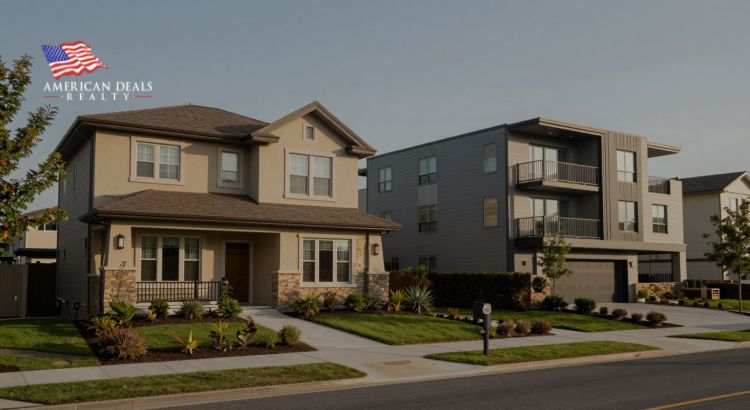
Building wealth through real estate is one of the most proven strategies for financial freedom. However, when deciding where to allocate your capital, every investor faces a critical crossroads: Should you invest in single-family residential properties or scale up with multi-family real estate?
Both asset classes offer cash flow, appreciation, and tax advantages, but they operate under vastly different dynamics—especially in high-demand markets like the San Francisco Bay Area and California's Central Valley.
At American Deals Realty, our team works closely with investors at every stage of their real estate journey. Whether you are buying your first income-producing rental or expanding an existing portfolio, understanding the pros, cons, and operational differences between residential and multi-family investments is the key to maximizing your returns.
Understanding the Basics
Before diving into the numbers, let's break down what each investment type involves:
-
Single-Family Residential (SFR): Standalone single-family homes, townhomes, or individual condos leased to one tenant or household.
-
Multi-Family Real Estate: Residential buildings with two or more units under a single mortgage—ranging from duplexes, triplexes, and quadplexes to large apartment complexes.
Single-Family Residential Investing: Low Friction & High Demand
Single-family homes are the traditional starting point for real estate investors. In regions like Modesto, Manteca, Fremont, and Dublin, demand for single-family rentals remains strong due to families seeking stability, top-rated schools, and private yard space.
Key Advantages:
-
Lower Barrier to Entry: SFRs typically require a smaller initial down payment and lower overall acquisition costs compared to commercial multi-family properties.
-
Higher Long-Term Appreciation: Single-family homes are priced based on comparable sales driven by owner-occupant demand, often leading to stronger historic equity growth.
-
Lower Tenant Turnover: Renters in single-family homes tend to view the property as their primary home, leading to longer average lease durations and lower vacancy turnover costs.
Key Challenges:
-
100% Vacancy Risk: When an SFR sits vacant, your rental income drops to zero instantly while holding costs (mortgage, taxes, insurance) remain.
-
Scaling Complexity: Acquiring 10 single-family rentals means managing 10 separate closings, 10 loans, and 10 roof/HVAC systems across different locations.
Multi-Family Real Estate Investing: Cash Flow & Scalability
Multi-family investing allows investors to build unit density quickly under a unified management framework.
Key Advantages:
-
Mitigated Vacancy Risk: If one tenant moves out of a 4-unit building (quadplex), you still maintain a 75% occupancy rate and consistent income to cover operational overhead.
-
Economies of Scale: Managing multiple tenants under one roof lowers per-unit maintenance costs and streamlines property management logistics.
-
Value Addition via NOI: Multi-family properties with five or more units are appraised based on Net Operating Income (NOI) rather than residential comps. Increasing rents or lowering operating expenses directly increases the forced appreciation of your property.
Key Challenges:
-
Higher Initial Capital Requirement: Purchasing multi-family properties requires significantly higher upfront cash reserves for down payments and capital expenditures.
-
Active Management Needs: Higher tenant turnover and shared common spaces demand systematic, professional management.
Side-by-Side Comparison
| Feature | Single-Family Residential | Multi-Family Real Estate |
| Initial Capital Required | Lower (e.g., 15–25% down) | Higher (Commercial/Portfolio financing) |
| Cash Flow Potential | Moderate (per property) | High (pooled per roof) |
| Vacancy Impact | High (0% or 100%) | Moderate to Low (spread across units) |
| Appreciation Driver | Retail Market Comps | Net Operating Income (NOI) + Market Comps |
| Management Complexity | Distributed per location | Centralized per site |
Which Strategy Fits Your Goals?
-
Choose Single-Family Residential If: You are starting out, looking for steady long-term capital appreciation, and want a straightforward entry into real estate investment with manageable capital commitments.
-
Choose Multi-Family Real Estate If: You have larger capital reserves, prioritize immediate cash flow over single-property appreciation, and want to scale your portfolio units efficiently.
How American Deals Realty Elevates Your Strategy
Navigating local real estate markets requires deep insight into neighborhood trends, property valuation, and off-market deal flow. Led by Broker Parminder Singh, the experienced team at American Deals Realty brings over 15 years of dedicated service across the San Francisco Bay Area and Central Valley markets (including Dublin, Fremont, San Jose, Modesto, and Manteca).
Whether you need help running cap rate calculations on a multi-family unit or sourcing high-yield single-family distress opportunities, American Deals Realty provides:
-
Exclusive Investment Property Hotlists: Access off-market, high-return SFRs and multi-family listings.
-
Comprehensive Market Valuation: Precision evaluations to ensure you buy at or below market value.
-
End-to-End Deal Strategy: Dedicated guidance from pre-approval and search through closing and portfolio growth.
Ready to Invest in Your Next Property?
Don't leave your real estate ROI to chance. Contact the investment specialists at American Deals Realty today to map out a personalized investment strategy.
-
?? Website: www.americandealsrealty.com
-
?? Phone: 510-566-2523
-
?? Offices: Dublin, CA | Modesto, CA